Azure Local health and alert architecture
Health catalog
| Domain | Signals | Default alert behavior |
|---|---|---|
| Compute | Cluster Service, node membership, quorum | Auto-resolving alerts |
| Compute performance | CPU, available memory | State only |
| Storage | Health Service faults, pool, volume/CSV | Auto-resolving alerts |
| Storage diagnostics | Individual physical-disk aggregate | State only; Health Service owns root-cause paging |
| Network | Network ATC intent convergence | Auto-resolving alert |
| Azure Integration | Registration/connection and local platform services | Auto-resolving alerts |
| Lifecycle | Failed or attention-required solution updates | Auto-resolving warning/critical alert |
| Monitoring | Shared-probe completion | Auto-resolving alert |
Four Failover Clustering event rules cover node removal, clustered-role failure, CSV access failure, and CSV no-longer-accessible conditions. Event rules supplement current state; they do not replace state monitors.
Threshold policy
CPU, memory, and volume capacity defaults are provisional development values. A release threshold requires evidence for duration, recovery, host reserve, failover reserve, workload density, scale, maintenance, and false-positive rate.
In particular, 75 percent memory used is not a universal Azure Local failure threshold. Available host memory, host/guest split, paging, pressure, failover capacity, and trend must be considered.
DA propagation
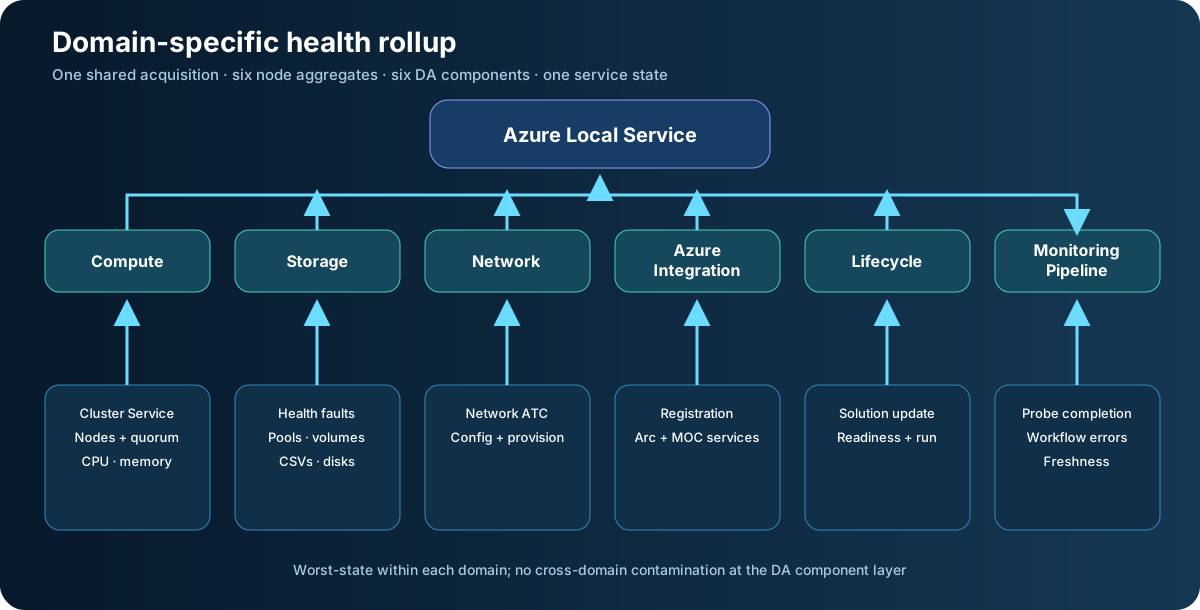
Each node has six domain aggregates. Component dependencies consume the matching aggregate, then six service dependencies apply worst-state rollup at the DA root. A storage failure therefore degrades Storage without falsely making Network unhealthy.